
The Supreme Court questioned sweeping Delhi Metro and train restrictions ahead of the CJP protest, urging the Centre to balance security arrangements with commuters’ rights.
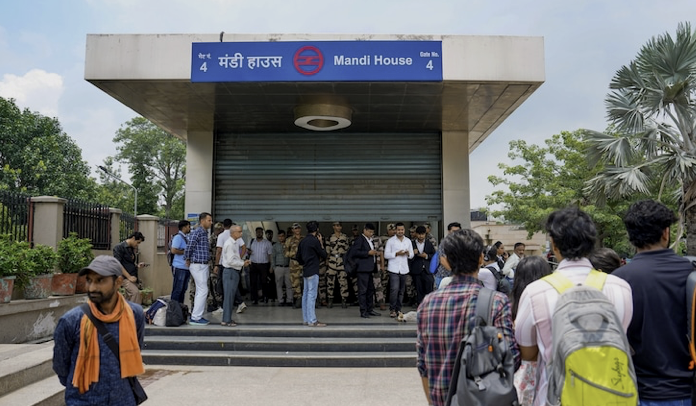
The Supreme Court on Delhi Metro closures raised serious concerns on Friday as authorities prepared for the Cockroach Janta Party’s (CJP) proposed protest at Jantar Mantar on October 10. The court questioned the decision to restrict access to 57 Metro stations and cancel several trains, warning that security measures must not bring public transport to a standstill.
“You can’t use a sledgehammer to kill a fly,” the court observed while hearing a plea challenging the restrictions. Chief Justice of India Surya Kant stressed that students, elderly people, workers and other commuters depend on public transport for their daily needs.
The bench said authorities could regulate movement to maintain law and order but should not impose blanket restrictions that leave people without reliable transport. It asked the Centre to reconsider the measures and assess which areas genuinely required restrictions.
Supreme Court Questions Closure of 57 Metro Stations
The Delhi Police had sought the closure of entry and exit gates at 57 Metro stations ahead of the planned protest against Chief Election Commissioner Gyanesh Kumar.
The proposed restrictions were scheduled to begin at 9 pm on Friday, October 9. Authorities also announced changes to train operations, while several rail services to New Delhi and Hazrat Nizamuddin stations faced cancellations.
The court expressed concern about commuters travelling from Gurugram, Greater Noida, East Delhi and South Delhi. It said authorities must distinguish between reasonable restrictions and a complete shutdown of essential services.
The bench also asked officials to reconsider road closures and examine whether security measures could target specific sensitive locations instead of disrupting movement across large parts of the capital.
Kapil Sibal Challenges Restrictions
Senior advocate and Rajya Sabha MP Kapil Sibal, appearing for CPI(M) general secretary M.A. Baby, challenged the restrictions before the court.
Sibal argued that the proposed closures and train cancellations would make movement across Delhi extremely difficult. He also stressed that the planned demonstration concerned a peaceful protest.
The petition raised concerns about the impact on ordinary citizens who had no connection with the demonstration but would face disruptions to their daily travel.
Centre Promises Proportionate Security Measures
Solicitor General Tushar Mehta, representing the Centre, told the court that he would consult the government and review the restrictions.
Mehta referred to incidents during an earlier CJP protest in July while explaining the security concerns behind the measures. However, the court maintained that authorities must balance public safety with commuters’ access to essential services.
The bench indicated that Metro train frequency could be reduced if necessary, but a complete halt to services would not be a reasonable response to the security challenge.
The court called for a reassessment of the restrictions; the reported hearing did not establish that all proposed closures had already been formally struck down.
Supreme Court Seeks Details of Proposed Protest
The hearing also focused on the legal status and arrangements for the proposed demonstration. The bench questioned why organisers had not challenged the Delhi Police decision denying permission for the protest.
The court emphasised that the right to peaceful assembly must operate within the framework of applicable laws and permissions. It also sought details about the expected number of participants and the arrangements needed to manage the gathering.
The Supreme Court subsequently asked the CJP and student organisations associated with the proposed demonstration to appear before it at 2 pm on Friday.
CJP Protest Targets Election Commission Chief
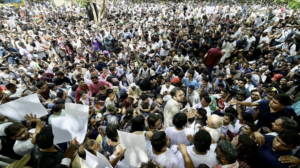
The CJP announced its October 10 demonstration at Jantar Mantar to demand the resignation of Chief Election Commissioner Gyanesh Kumar over objections to the Special Intensive Revision (SIR) of electoral rolls.
The planned protest has prompted heightened security across Delhi, including barricading and surveillance at sensitive locations. Police have cited concerns about crowd movement and possible law-and-order problems.
The Supreme Court’s intervention has brought the focus back to a central question: how can authorities maintain security around a major demonstration without causing disproportionate hardship to millions of commuters?
The court’s observations underline the need to balance public order, peaceful assembly and access to essential transport services.