
The US Labour Department has suspended eight technology companies from the PERM green card programme amid federal investigations into alleged visa-related abuses. The move could delay permanent residency applications for affected foreign workers.
The United States has suspended major technology and IT services companies, including Infosys, Tata Consultancy Services (TCS), Wipro, HCLTech and Cognizant, from a key employment-based green card programme.
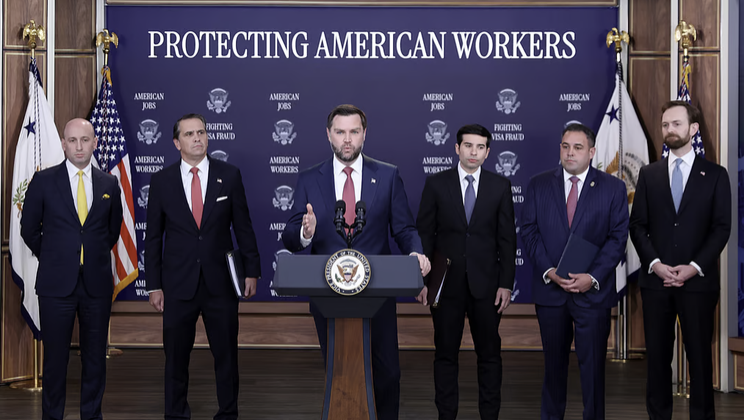
The action, announced on October 8 by US Vice President JD Vance and Labour Secretary Keith Sonderling, also affects Microsoft, Adobe and Capgemini. The US Department of Labour said the suspensions followed federal investigations into alleged misuse of employment-based immigration programmes. The allegations have not, by themselves, established that the companies committed fraud.
Full List of Companies Suspended From the PERM Programme
The eight companies named by US officials are:
- Cognizant
- Infosys
- Tata Consultancy Services (TCS)
- Wipro
- HCLTech
- Capgemini
- Microsoft
- Adobe
The suspension prevents the affected employers from submitting new applications or progressing pending cases under the Permanent Labour Certification (PERM) programme, according to reports.
PERM is a key stage in the employment-based green card process. Employers generally need labour certification from the US Department of Labour before proceeding with certain employment-based permanent residency applications.
What Is the PERM Green Card Programme?
The PERM process requires employers to demonstrate that there are not enough qualified and available US workers for a particular position and that hiring a foreign worker will not adversely affect the wages and working conditions of similarly employed US workers.
Once an employer secures labour certification, it can proceed to the next steps of an eligible employee’s employment-based green card application.
The suspension therefore affects an important pathway to permanent residency for foreign professionals sponsored by the named companies.
Will H-1B Visa Holders Lose Their Visas?
No. The PERM suspension does not automatically cancel existing H-1B visas or green cards.
The H-1B programme allows eligible employers to hire foreign professionals for specialised occupations on a temporary basis. PERM, by contrast, supports a route towards permanent residency.
However, affected workers whose green card applications depend on the suspended employers may face delays. The disruption could be particularly significant for professionals who have spent years waiting for permanent residency and depend on their employer to complete the required steps.
The suspension does not mean that every employee of these companies will lose their immigration status. The impact will depend on each worker’s circumstances and the stage of their application.
JD Vance Accuses Companies of Replacing American Workers
Vance defended the move as part of the administration’s effort to protect American workers. He accused major technology companies of using foreign-worker visa programmes at the expense of US employees and described the H-1B system as “rife with fraud”.
He also singled out Microsoft, alleging that the company had laid off thousands of American employees while continuing to use employment-based immigration programmes.
The Department of Labour has cited ongoing investigations as the basis for the suspensions. Officials have not publicly established company-specific findings of fraud through this announcement.
Why Indian IT Companies Face Particular Attention
The decision has drawn attention in India because several affected companies are major IT service providers with substantial US operations.
Indian professionals account for a significant share of H-1B visa recipients, and many technology workers rely on employer-sponsored immigration pathways to seek permanent residency in the United States.
The immediate consequences will vary by company and employee. Workers with pending PERM applications could face processing delays, while those with existing green cards or valid H-1B status are not automatically stripped of those benefits by the suspension.
The development adds another layer of uncertainty for foreign professionals pursuing long-term careers in the US technology sector.
What Happens Next?
The duration and final consequences of the suspensions will depend on the investigations and any subsequent decisions by US authorities.
For now, employees sponsored by the affected companies should distinguish between a temporary work visa, an employment-based green card application and permanent resident status. These are separate immigration processes with different requirements.
The suspension blocks an important green card pathway for the named employers, but it does not automatically end the US employment or immigration status of all their foreign workers.