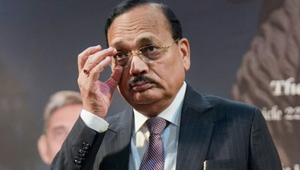

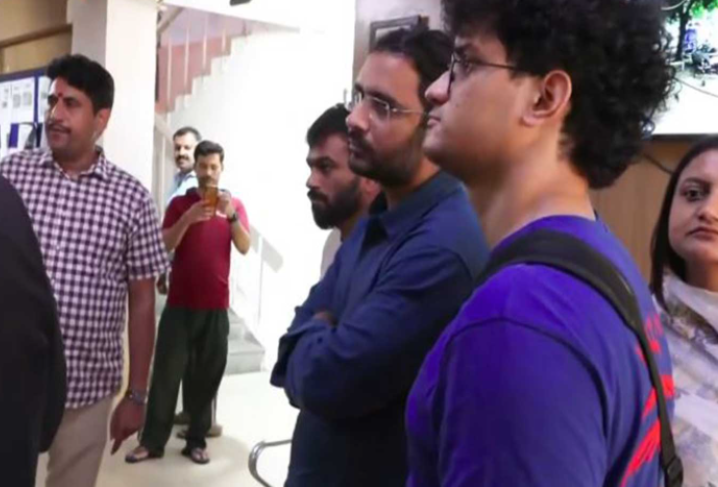
The intense political and administrative standoff in the national capital over protests demanding the resignation of Chief Election Commissioner Gyanesh Kumar has reached a major turning point. On Sunday, an Executive Magistrate Court in Delhi ordered the conditional release of key Cockroach Janata Party (CJP) leaders Abhijeet Dipke, Saurav Das, and Ashutosh Ranka from detention.
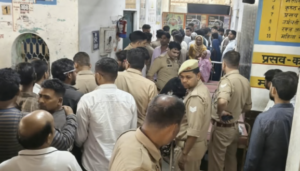
The court granted their release on the mandatory condition of executing a bond to maintain peace and public order for a period of one year. The leaders had been dramatically detained on Saturday from inside an Air India aircraft at Delhi’s Indira Gandhi International (IGI) Airport before being produced before the Additional City Magistrate (ACM) Court in Delhi Cantt.
Promptly following their release, the CJP posted on its official ‘X’ handle, asserting that the Delhi Police were ultimately compelled to let their leaders go. In a parallel development, popular YouTuber and commentator Dhruv Rathee, who was placed under preventive custody at his Gurugram residence ahead of the agitation, was also released by the Delhi Police around 3:00 AM on Sunday. CJP’s legal head, Ratna Singh, confirmed that the party’s legal counsel remained stationed at the Delhi Cantt police station throughout the proceedings, securing the leaders’ release after completing formal hearings before the Executive Magistrate.
Legal experts noted that the entire operation was conducted under the framework of preventive detention. Under Section 170 of the Bharatiya Nagarik Suraksha Sanhita (BNSS), police are empowered to detain an individual without a warrant for up to 24 hours to prevent the commission of a cognizable offense or breach of peace. The detainees are subsequently brought before an Executive Magistrate under Section 126 of the BNSS to initiate proceedings for peace bonds.
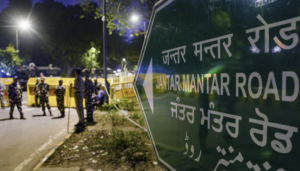
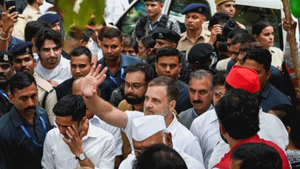
The city had witnessed an unprecedented security clampdown on Saturday, during which authorities detained more than 3,000 individuals across various locations to halt the unsanctioned demonstration. While most detainees were released by Saturday evening, the key leaders were held overnight. A massive security deployment exceeding 20,000 personnel from the Delhi Police and Central Armed Police Forces (CAPF) was mobilized, including approximately 6,500 personnel stationed around Jantar Mantar alone.
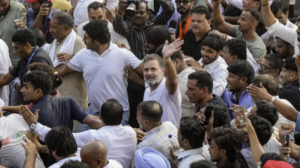
Additionally, 150 demonstrators were rounded up from Connaught Place, alongside preventive detentions of roughly 600 suspected elements across the city. Strict curbs—including metro station closures, train cancellations, and internet suspensions around Janpath and Kartavya Path—were rolled back late Saturday night as conditions stabilized. Despite the administrative crackdown, the CJP and the All India Students’ Association (AISA) have reiterated their resolve, issuing fresh calls to gather at Jantar Mantar on Sunday to continue their protest.