

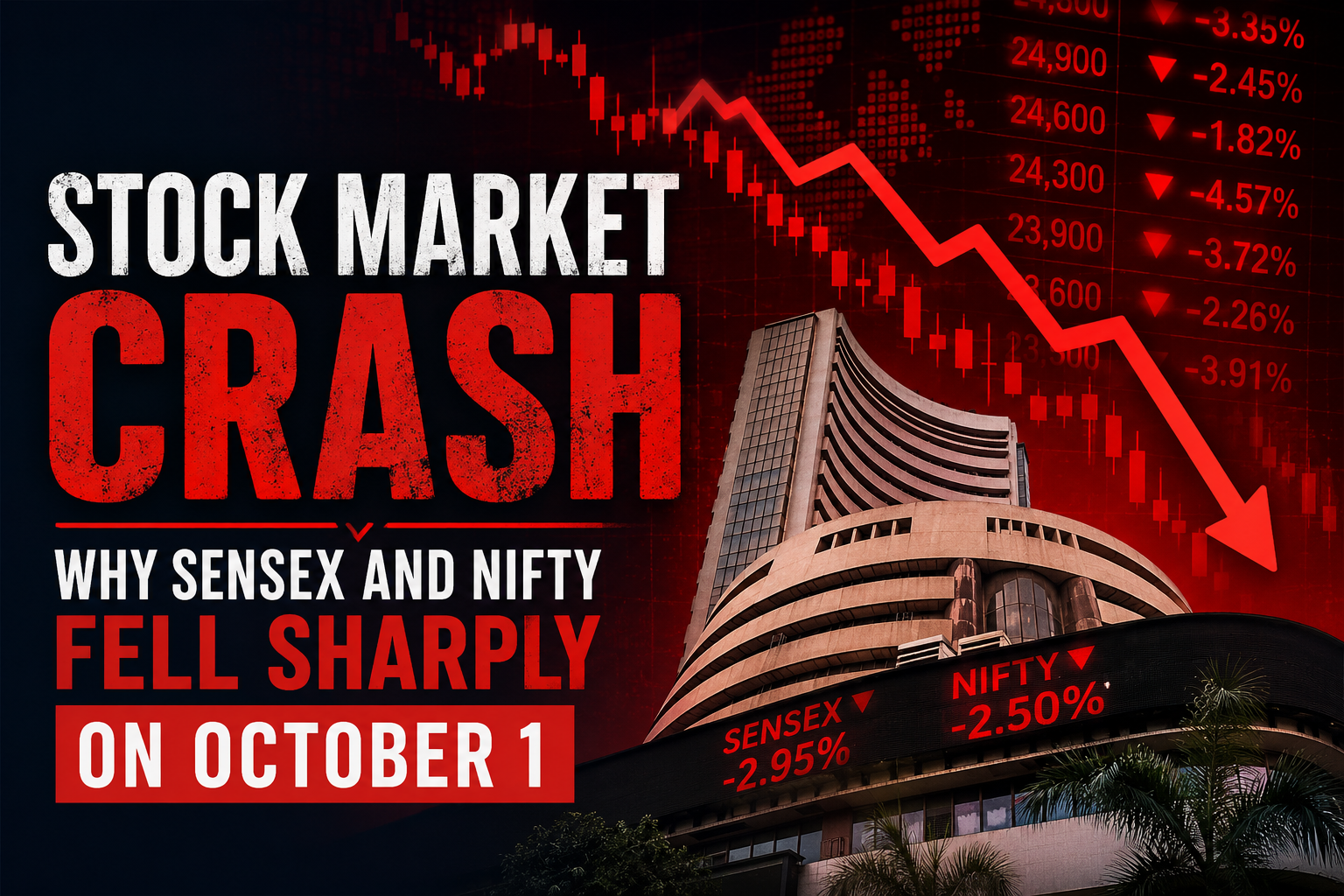
Sensex plunged over 1,000 points while the Nifty slipped below 22,300 as foreign selling, high yields and crude prices pressured Indian equities.
Indian stock markets faced heavy selling pressure on October 1, 2026. The Sensex fell more than 1,000 points during intraday trade, while the Nifty 50 dropped below the 22,300 level.
The sell-off wiped out around ₹10.39 lakh crore in market value from BSE-listed companies. The combined market capitalisation fell from about ₹4.73 lakh crore crore to ₹4.63 lakh crore crore, based on market data reported during trading.
Why Did the Stock Market Crash?
Several factors combined to pressure Indian equities. Heavy foreign selling remained one of the biggest concerns for investors.
Foreign investors sold more than ₹10,000 crore of Indian equities on September 30. Persistent outflows have added pressure to the market in recent weeks.
Rising global bond yields also affected sentiment. Higher yields can make bonds more attractive compared with equities. They can also increase concerns about borrowing costs and future interest rates.
Weak Rupee and High Crude Add Pressure
The Indian rupee has also faced pressure against the US dollar. A weaker rupee can increase the cost of imported commodities, including crude oil.
Brent crude remained close to $100 per barrel. High oil prices can put pressure on India’s import bill and inflation outlook.
Investors are also watching the upcoming Reserve Bank of India policy meeting. Rising inflation concerns and higher bond yields have increased expectations of a possible rate hike, according to market analysts.
IPOs Create Liquidity Pressure
Market liquidity has emerged as another concern. Analysts have pointed to the large number of initial public offerings as a factor that can absorb money from the secondary market.
When fresh issues attract substantial investor funds, fewer funds may remain available for existing listed shares. Foreign selling can increase that pressure further.
Auto Stocks Among Biggest Losers
The decline spread across several sectors. The Nifty Auto index fell around 4% during intraday trading.
Bajaj Auto, Mahindra & Mahindra and Maruti Suzuki were among the major losers on the Sensex. Metal, defence and consumer durable stocks also faced strong selling pressure.
The broader market also weakened. Mid-cap and small-cap indices fell sharply, showing that selling was not limited to large companies.
Market Volatility Rises
The India VIX, which measures expected market volatility, jumped more than 13% to around 15.28 during the session. The increase indicated greater nervousness among traders.
Market breadth also remained weak. Thousands of stocks traded lower on the BSE, while only a smaller number advanced.
Eighth Straight Week of Losses
The market decline comes after a prolonged period of weakness. The Nifty 50 and Sensex were on track for their eighth consecutive weekly decline, according to market data.
Reuters reported that this would mark the longest weekly losing streak for India’s benchmark indices in 25 years. Foreign outflows, crude prices near $100 and rising global yields have remained key pressures.
For investors, the focus now remains on foreign fund flows, crude prices, the rupee, bond yields and upcoming monetary-policy signals.