
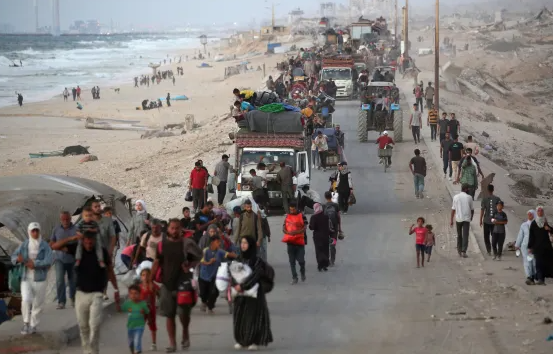
On September 21, 2025, at least 14 Palestinians were killed in Israeli attacks across the Gaza Strip since dawn, with nine deaths reported in Gaza City alone, according to medical sources cited by Al Jazeera. The strikes, part of Israel’s intensified Operation Gideon’s Chariots II, targeted residential areas and displaced civilians, exacerbating the ongoing humanitarian crisis in the famine-stricken enclave. This follows a deadly day on September 20, when 91 Palestinians, including family members of a prominent doctor and four aid-seekers on a truck fleeing northern Gaza City, were killed, per medics.
Details of the Attacks
- Gaza City Casualties: Of the 14 killed since dawn, nine were in Gaza City, where Israeli forces continued heavy aerial and artillery bombardment. Specific incidents include:
- Strikes on residential neighborhoods like Sheikh Radwan, Al-Sabra, and Tel Al-Hawa, with no prior warnings, as reported by Al Jazeera’s Hani Mahmoud.
- Victims included family members of Dr. Muhammad Abu Salmiya, director of Al-Shifa Hospital, with his brother Majed Abu Salmiya and several relatives, including children, killed.
- Two girls in Shati refugee camp and two children in a school-turned-shelter were also among the casualties.
- Previous Day’s Toll: On September 20, 91 Palestinians were killed, including:
- A prominent doctor’s family members, targeted in a residential strike.
- Four individuals on a truck fleeing northern Gaza City, hit by Israeli forces.
- A woman in the Sabra neighborhood, as tanks advanced in the area.
- Famine and Aid Crisis: The Gaza Health Ministry reported four malnutrition-related deaths on September 20, including one child, bringing the total hunger-related deaths since October 2023 to 440, with 147 children. A recent UNICEF aid theft, where gunmen seized supplies for 2,700 malnourished children, further worsened the crisis.
Context of the Offensive
Israel’s military, aiming to dismantle Hamas’s presence in Gaza City—described as the group’s “last stronghold”—has escalated its ground and air operations. The IDF estimates 480,000 Palestinians have fled south since late August, leaving about 600,000 in the city. Evacuation orders via leaflets and statements from the IDF’s Arabic-language spokesman, Avichay Adraee, directed residents to use Al-Rashid Street to move south, as Salah al-Din Road was closed. However, many residents, like schoolteacher Ahmed from Sabra, cited dangers, lack of safe zones, and fears of permanent displacement as reasons to stay.
The offensive has drawn international criticism, with a UN commission on September 16 accusing Israel of genocide, citing deliberate attacks on civilians and infrastructure. Israel rejected the report as “distorted.” The UN and aid groups have warned of an “irreversible humanitarian collapse,” with over 641,000 people facing catastrophic hunger (IPC Phase 5) and 25 of Gaza’s 38 hospitals non-functional.
Broader Implications
The Gaza Health Ministry reports over 65,000 Palestinian deaths since the war began on October 7, 2023, following Hamas’s attack that killed 1,200 Israelis and took 251 hostages. A peer-reviewed Lancet study estimates the true toll could be 40% higher due to unrecovered bodies and indirect deaths from starvation and disease. The war’s resumption in March 2025, after a January ceasefire collapsed, has intensified displacement, with 90% of Gaza’s 2.3 million population displaced.
Hamas and international mediators, including Qatar and Egypt, have pushed for a renewed ceasefire, but Israeli PM Benjamin Netanyahu insists on eliminating Hamas and securing all hostages, with 20 believed alive in Gaza. The US, while urging a negotiated end, has offered tacit support, with Secretary of State Marco Rubio calling Hamas “savages.”
Why It Matters
The latest attacks, killing at least 14 since dawn and 91 the previous day, highlight the relentless pace of Israel’s offensive, which has devastated Gaza City’s infrastructure and deepened famine conditions. With no safe zones, restricted aid, and ongoing bombardment, the civilian toll continues to rise, fueling global calls for a sustainable ceasefire and urgent humanitarian intervention.