
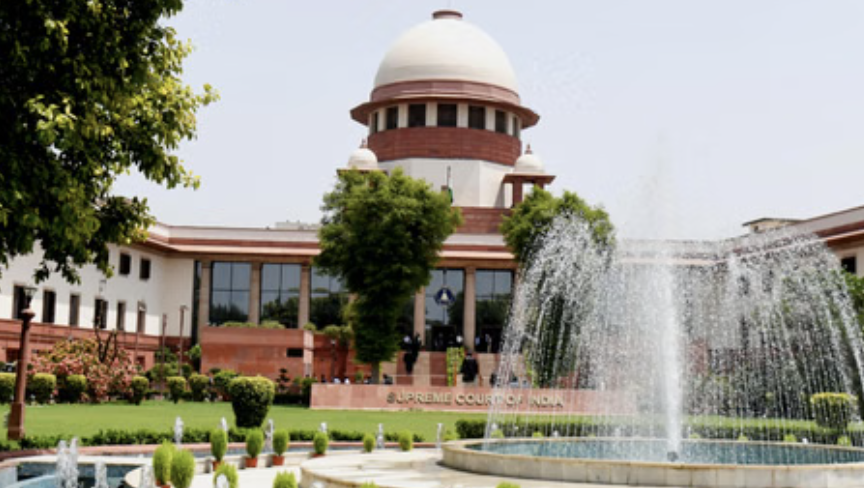
With winter approaching and the annual spike in air pollution looming large, especially in Delhi and the National Capital Region (NCR), the Supreme Court of India has adopted a stern stance on the issue. On September 17, 2025, a bench led by Chief Justice B.R. Gavai directed the Central Pollution Control Board (CPCB), the Commission for Air Quality Management (CAQM), and state pollution control boards to devise and submit comprehensive measures to combat air pollution within three weeks. The court emphasized the urgency ahead of the peak pollution season, when factors like stubble burning, vehicular emissions, and adverse weather trap pollutants, exacerbating the crisis.
The directives came during a hearing on a suo motu plea concerning long-pending vacancies in pollution control authorities. The bench lambasted state governments—particularly in Uttar Pradesh, Haryana, Rajasthan, and Punjab—for failing to fill these positions, noting that inadequate staffing during high-pollution periods worsens the environmental emergency. “Inadequate manpower during peak pollution seasons aggravates the environmental crisis,” the court observed, granting only six months to fill promotional posts in state boards, CAQM, and CPCB, while imposing a stricter three-month deadline for direct recruitment vacancies in the NCR states.
The CAQM, a statutory body focused on improving air quality in the NCR and adjoining areas (including parts of Delhi, Punjab, Haryana, Uttar Pradesh, and Rajasthan), along with the CPCB, were specifically instructed to outline preventive strategies. This includes enforcing the Graded Response Action Plan (GRAP), which imposes escalating restrictions like construction bans, odd-even vehicle schemes, and farm fire curbs when air quality deteriorates. The next hearing is scheduled for October 8, 2025, by which time the authorities must present their plans.
This intervention builds on the Supreme Court’s historical oversight of Delhi’s air pollution, from mandating CNG for vehicles in 1998 to recent reprimands in April 2025 over delays in thermal power plant controls and weak enforcement. Last winter (2024-25), Delhi’s Air Quality Index (AQI) frequently crossed 400 (severe), leading to school closures and health emergencies. The CPCB has already initiated its Winter Action Plan 2024-25, monitoring daily AQI and forecasting via tools like SAFAR, but the court’s push aims to ensure proactive implementation amid rising concerns over climate change and public health.
Environmental activists and experts hail the order as a timely wake-up call, urging stricter accountability from states to prevent another “toxic winter.”