
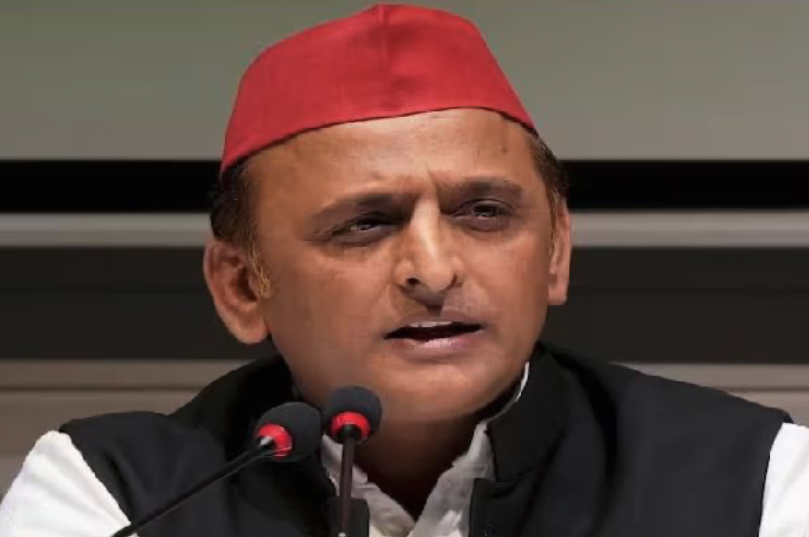
On the day marked for the ceremonial flag hoisting at the newly built Ram Mandir in Ayodhya, Samajwadi Party chief Akhilesh Yadav stirred political discussions with a surprising move. Instead of visiting Kedarnath — a plan many speculated he would follow — Akhilesh announced that he would offer prayers at a local temple in Etawah, his home turf. The post, shared across his social media handles, is being seen by political observers as a calculated “masterstroke.”
According to party insiders, Akhilesh’s decision aims to send a strong political message: devotion does not require extravagant displays or travel to distant pilgrimage spots. By choosing Etawah, he highlighted his connection to his roots and projected the idea that local temples and traditions hold equal spiritual importance. His post emphasized the significance of community, cultural identity, and simplicity in worship.
Political analysts believe this move could strategically strengthen his appeal among traditional voters in Uttar Pradesh, especially at a time when parties are actively shaping their religious narratives. While the BJP has positioned itself strongly around the Ram Mandir movement, the SP appears to be countering it with a more grounded, people-centric approach.
Akhilesh’s supporters praised the decision, calling it a refreshing shift from political theatrics. Critics, however, claimed it was a deliberate attempt to reclaim lost political ground in the state. Regardless of interpretations, the SP chief’s move has certainly triggered discussion across political circles and social media platforms.
As the Ram Mandir ceremonies continue in Ayodhya, Akhilesh Yadav’s symbolic gesture from Etawah adds another layer to the evolving political dynamics in Uttar Pradesh — suggesting that the battle of narratives is far from over.