
Delhi launched its first full-scale cloud seeding operation on Tuesday to combat severe smog after Diwali. This trial aims to induce artificial rain and cut hazardous air pollution levels across the capital.
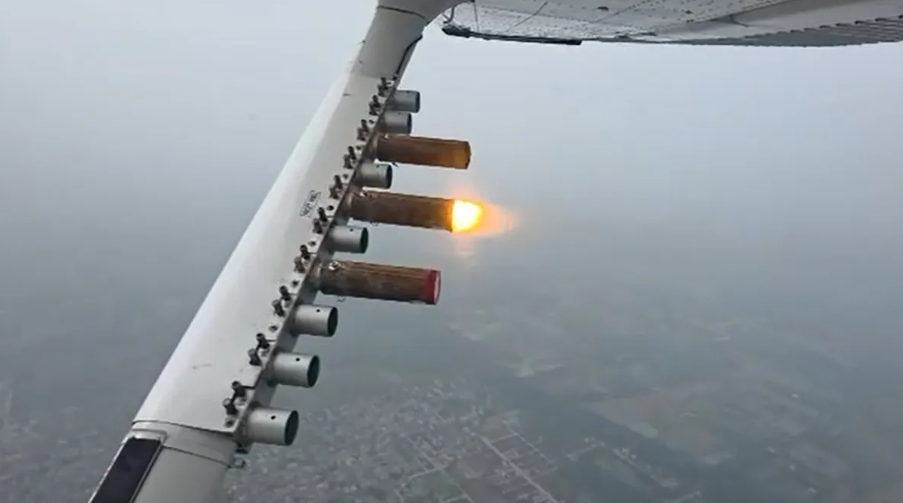
An aircraft from IIT Kanpur conducted the seeding over multiple city areas. It released salt-based and silver iodide flares into moisture-rich clouds to spark rainfall. The flight, using a modified Cessna-206H, targeted northern Delhi fringes like Khekra, Burari, and Mayur Vihar.
Environment Minister Manjinder Singh Sirsa noted the 12:30 pm start delayed due to poor visibility. Eight flares were deployed over 30 minutes. He expects rain within 15 minutes to four hours if successful. “This could greatly lower pollution,” Sirsa said. Two more trials followed today.
Last week’s test over Burari used small chemical doses but failed due to low moisture (under 20%, versus the needed 50%). IMD and Delhi’s environment department greenlit the full project.
Delhi’s AQI hit 305 on Tuesday morning—’very poor’—with haze blanketing the city. CPCB data showed 27 of 38 stations in the same range. Stubble burning in nearby states worsened the winter spike.
The cabinet approved five trials in May for Rs 3.21 crore. Delays from weather pushed it from May to now. Cloud seeding works by adding particles like silver iodide to clouds. These form nuclei for water droplets to condense and fall as rain.
Experts predict quick rain in ideal conditions (15-30 minutes). In cooler or dry clouds, it may take two hours or fail. Wind, temperature, and cloud height matter most.
The trials form part of Delhi’s winter anti-pollution plan. A short drizzle could clear airborne toxins and particulate matter, easing breathing for residents.