
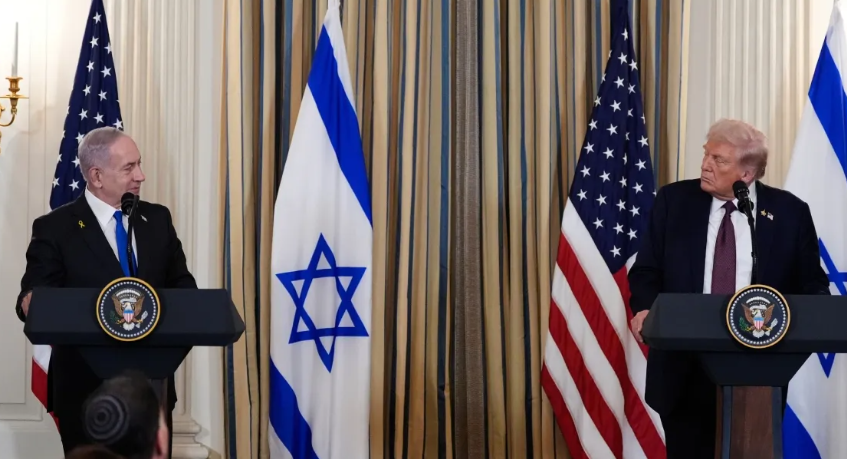
The White House released President Donald Trump’s comprehensive 20-point proposal on Monday to end the nearly two-year Israel-Hamas conflict in Gaza, following a meeting with Israeli Prime Minister Benjamin Netanyahu. Israel has endorsed the plan, which promises an immediate ceasefire, hostage releases, and Gaza’s redevelopment into a “deradicalized, terror-free zone.” However, Hamas has rejected it as vague and aligned with Israeli interests, with no formal consultation beforehand. The proposal, sent to Hamas via mediators, offers amnesty for disarmament but bars the group from future governance, raising doubts about its viability amid ongoing violence—39 Palestinians have been killed since its announcement.
Key Elements of the Proposal
Trump’s plan outlines a swift end to hostilities if accepted by both sides, emphasizing security, humanitarian aid, and long-term economic revival. Here’s a breakdown of the 20 points:
- Deradicalization Goal: Gaza will become a deradicalized, terror-free zone that poses no threat to its neighbors.
- Redevelopment Focus: Gaza will be redeveloped for the benefit of its people, who have endured immense suffering.
- Immediate Ceasefire: If both sides agree, the war ends right away. Israeli forces withdraw to agreed lines, suspending all operations and freezing battle lines until full withdrawal.
- Hostage Release Timeline: Within 72 hours of Israel’s public acceptance, Hamas releases all hostages, alive and deceased.
- Prisoner Exchange: Israel then releases 250 life-sentence prisoners and 1,700 Gazans detained post-October 7, 2023, including all women and children. For every Israeli hostage remains returned, Israel releases remains of 15 deceased Gazans.
- Hamas Amnesty: Members committing to peaceful coexistence and decommissioning weapons receive amnesty; those wishing to leave get safe passage to other countries.
- Aid Surge: Full aid enters Gaza immediately upon acceptance, covering infrastructure rehab (water, electricity, sewage), hospitals, bakeries, and rubble removal—matching January 19, 2025, aid levels.
- Aid Distribution: Proceeds without interference via UN, Red Crescent, and international agencies; Rafah crossing opens bidirectionally under prior agreement terms.
- Transitional Governance: A technocratic, apolitical Palestinian committee handles daily services, overseen by a new “Board of Peace” chaired by Trump, including figures like former UK PM Tony Blair.
- Economic Plan: A “Trump economic development plan” convenes experts from modern Middle East city projects to blend investments with security and governance.
- Special Economic Zone: Establishes a zone with preferential tariffs and access, negotiated with participating countries.
- Voluntary Relocation: No forced departures from Gaza; voluntary leavers can return freely, with encouragement to stay and rebuild.
- Hamas Exclusion: Hamas and affiliates barred from governance; all military/terror infrastructure destroyed and prohibited from rebuilding, supervised by independent monitors and an funded buy-back program.
- Regional Guarantees: Partners ensure compliance, so “New Gaza” threatens no one.
- Stabilization Force: US partners with Arab/international allies to deploy an International Stabilization Force (ISF) for training Palestinian police, border security, anti-smuggling, and coordination with Israel/Egypt.
- Israeli Withdrawal: No occupation or annexation; IDF withdraws progressively as ISF assumes control, retaining a temporary security perimeter until full demilitarization.
- Fallback if Rejected: If Hamas delays/rejects, aid and redevelopment proceed in terror-free ISF-controlled areas.
- Interfaith Dialogue: Launches process to foster tolerance and coexistence between Palestinians and Israelis.
- Path to Self-Determination: As Gaza stabilizes and Palestinian Authority reforms progress, conditions could enable a credible route to Palestinian statehood.
- US-Facilitated Talks: US brokers Israel-Palestinian dialogue for a political horizon of peaceful coexistence.
Reactions and Challenges
Netanyahu hailed it as achieving Israel’s war aims, vowing to “finish the job” if Hamas refuses. Trump called it a “historic day for peace,” claiming Hamas is eager but noting their lack of the written plan. Hamas spokesperson Mahmoud Mardawi dismissed it as mirroring Israeli views, lacking guarantees and self-determination protections; they plan factional discussions. The Palestinian Authority welcomed Trump’s efforts, while Arab states like Qatar—key mediators—agreed to enhanced coordination post-Netanyahu’s apology for September strikes on Doha.
Critics, including Gaza residents and analysts, see it as ultimatum-heavy, potentially enabling continued Israeli operations in rejecting areas. With no direct Hamas input, and violence persisting, the plan’s success hinges on mediation breakthroughs. Trump emphasized US backing for Israel’s security if needed, underscoring the high stakes.