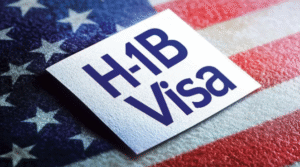

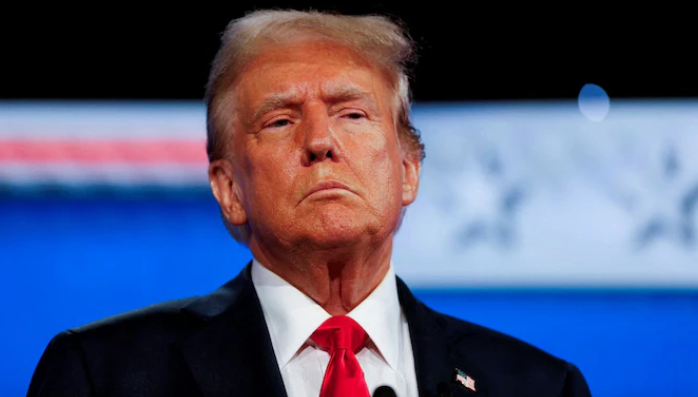
US President Donald Trump signed a proclamation imposing a $100,000 annual fee on all H-1B visa applications, effective from midnight on Sunday, September 21, 2025. This sweeping change, announced from the White House, applies to both new applicants and current H-1B visa holders, requiring employers to pay the hefty fee per worker each year for the visa’s duration, typically three to six years. The move, aimed at curbing alleged abuse of the H-1B program, has sparked widespread debate, with tech giants warning of disruptions and critics questioning its legality.
Details of the Proclamation
The proclamation, issued under sections 212(f) and 215(a) of the Immigration and Nationality Act, restricts entry for H-1B workers unless the $100,000 fee is paid, framing the program’s misuse as a threat to American jobs and national security. White House staff secretary Will Scharf stated the fee ensures only “truly extraordinary” workers are hired, preventing companies from replacing US workers with lower-paid foreign labor. The fee is in addition to existing charges, which include a $215 lottery registration and a $780 Form I-129 filing fee. Employers must retain proof of payment, verified by the Department of State during the petition process, with non-compliance leading to visa denials.
Trump also introduced a “gold card” visa program, allowing wealthy individuals to secure permanent residency for a $1 million payment or $2 million if sponsored by a company. Additionally, the proclamation directs the Department of Labor to revise prevailing wage levels to prevent undercutting American salaries, addressing concerns that H-1B workers often earn as little as $60,000 compared to $100,000+ for US professionals.
Impact on Tech Industry and Workers
The H-1B program, capped at 85,000 visas annually (65,000 standard plus 20,000 for advanced-degree holders), is critical for tech giants like Amazon (over 10,000 H-1B workers), Microsoft, Google, and Indian firms like Tata Consultancy and Infosys. The new fee could cost companies millions annually, potentially forcing smaller startups and businesses to scale back hiring or seek alternatives like O-1 or EB-1A visas. Companies like Microsoft, JPMorgan, and Amazon have advised H-1B employees abroad to return to the US before the Sunday deadline to avoid entry restrictions, according to internal emails.
Commerce Secretary Howard Lutnick claimed tech CEOs are “on board,” arguing the fee promotes hiring recent US graduates. However, critics like Deedy Das of Menlo Ventures warned on X that it “creates disincentives to attract the world’s smartest talent,” potentially harming US innovation. Elon Musk, a former H-1B holder, has defended the program, emphasizing its role in building companies like Tesla and SpaceX.
Legal and Political Backlash
Immigration experts, including Aaron Reichlin-Melnick of the American Immigration Council, called the fee “almost certainly illegal,” arguing that Congress only authorizes fees to cover processing costs, not restrictive penalties. Doug Rand and Tom Jawetz echoed concerns, predicting swift legal challenges, as the proclamation bypasses Congress and formal rulemaking. The use of INA section 212(f) to impose the fee is seen as a legal stretch, likely to face court scrutiny.
The policy has divided Trump’s base. Immigration hardliners, like Nikki Haley, support it, arguing for investment in American workers, while tech leaders like Musk advocate for H-1B’s role in global competitiveness. Posts on X reflect this rift, with some praising the move as protecting US jobs and others warning of economic fallout.
Broader Implications
The fee, if enforced, could reshape the US workforce, particularly in tech-heavy states like California. It may push companies to relocate jobs abroad or hire domestically, though critics argue it could deter top talent, impacting innovation. The proclamation allows case-by-case exemptions for “national interest” but lacks clear guidelines, raising concerns about arbitrary enforcement. With nearly 400,000 H-1B approvals in FY 2024, mostly renewals, the policy’s impact on existing workers remains uncertain.